
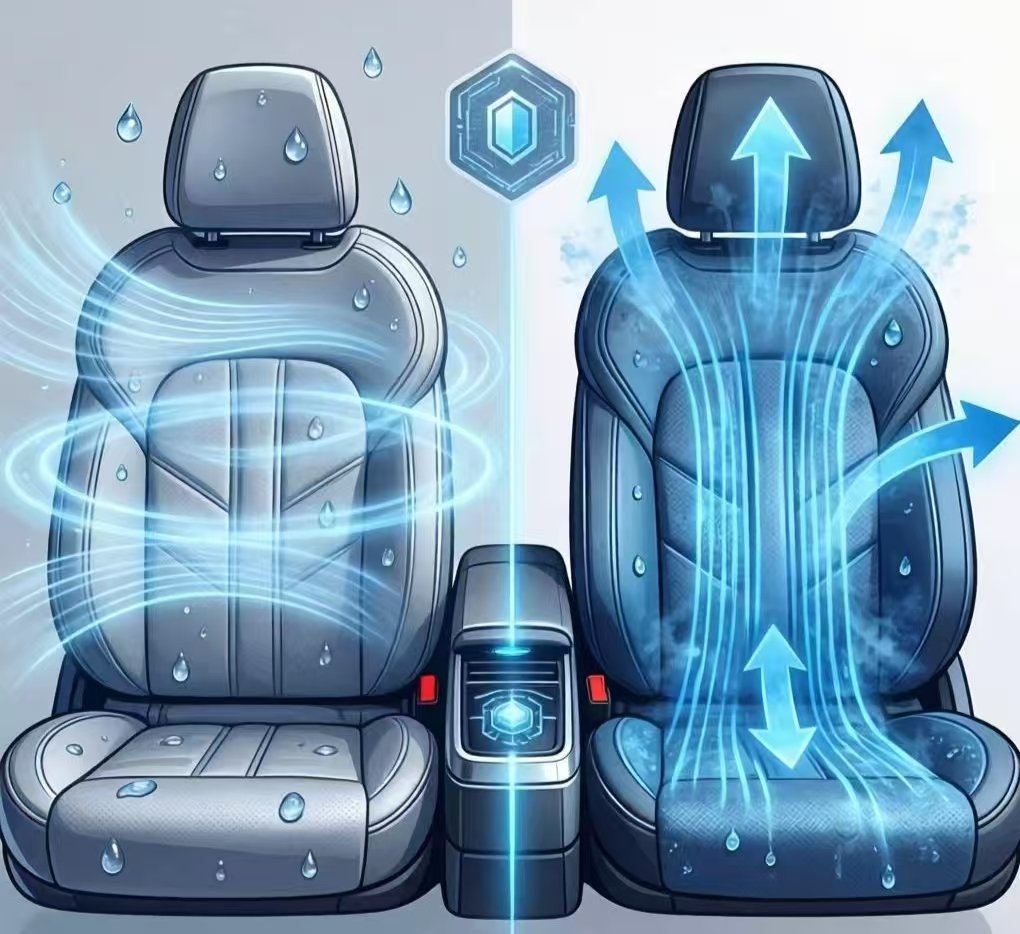
As global temperatures climb and summer heatwaves become more intense, car seat cooling has evolved from a luxury perk to a near-essential feature for drivers in hot climates. But not all “cool” seats are created equal. The terms ventilated seats and cooled seats (sometimes called active cooled or refrigerated seats) are often used interchangeably by dealers and marketers, yet they deliver noticeably different performance—especially when cabin temperatures soar past 100°F (38°C) after the car has been parked in direct sun.
In this 2026 guide, we break down the real differences based on recent independent tests, user reports from extreme-heat regions (like Phoenix, Arizona summers averaging 110°F+), and the latest material advancements that are making both systems more effective.
How Ventilated Seats Work (The Most Common Type)
Ventilated seats rely on small, high-efficiency fans embedded in the seat structure. These fans typically create a suction effect (pulling warm air and body moisture away from your skin through perforated upholstery) rather than blowing air outward. This promotes evaporative cooling—your sweat evaporates faster, making you feel drier and more comfortable.
- Air circulated: Cabin air (ambient temperature inside the vehicle).
- Cooling mechanism: Airflow + moisture evaporation.
- Speed to relief: Noticeable in 3–10 minutes; best when the cabin is already preconditioned via remote start or app.
- Energy use: Low—fans draw minimal power, friendly for EVs and hybrids.
Real-world performance in extreme heat: In 2025–2026 owner feedback from hot regions, ventilated seats reduce perceived seat-surface temperature by 5–15°F (3–8°C) and dramatically cut “sticky back” sweat buildup. However, when the car has baked to 130–140°F internally, the initial air pulled through is hot—so relief feels subtle or delayed until cabin AC lowers overall temps.
Pros:
- Quieter operation (fans often whisper-level).
- Excellent moisture management in humid conditions.
- Widely available on mid-range and premium trims.
Cons:
- Less effective against intense conductive heat from sun-soaked leather.
- No true “cold-to-the-touch” sensation.
How Cooled (Active/Refrigerated) Seats Work
True cooled seats go further by actively chilling the air before it reaches you. This is achieved via:
- Integration with the vehicle’s AC system (ducting chilled air).
- Or dedicated thermoelectric (Peltier) modules or small refrigeration elements in the seat.
- Air circulated: Pre-chilled or refrigerated air.
- Cooling mechanism: Direct temperature reduction + airflow.
- Speed to relief: Faster and more aggressive—surface can feel cold within minutes.
Real-world performance: In sticky, humid extreme heat, cooled seats outperform ventilated ones significantly. Tests and reviews show they drop seat-contact temperature more aggressively and combat the “sweat layer” better. Some high-end systems combine suction ventilation with chilled air for hybrid performance.
Pros:
- Superior in 100°F+ + high humidity.
- Provides actual cold sensation (like sitting on a chilled surface).
- Ideal for luxury EVs where battery efficiency allows dedicated cooling without heavy AC drain.
Cons:
- Higher cost and complexity.
- Slightly more power draw.
- Rarer in 2026 mainstream vehicles.
2026 Real-World Tests: Extreme Heat Showdown
Recent owner reports and limited independent comparisons (e.g., from Phoenix commuters and 2025–2026 model-year feedback) highlight:
- Ventilated seats shine for everyday hot weather (85–100°F). They provide quick sweat evaporation and comfort during long drives once the cabin cools. In one Phoenix example, a ventilated Highlander offered noticeable relief in under 5 minutes on 110°F days—far better than no ventilation.
- Cooled seats win in brutal, heat-soaked scenarios (car parked all day in 110°F+ sun). They deliver faster, deeper cooling and feel “refreshingly cold,” especially on leather. However, many 2025–2026 “ventilated” systems (common in mainstream brands) feel subtle or “weak” compared to true active-cooled legacy setups.
- Hybrid “performance cooled” seats (combining ventilation + chilled air + advanced controls) from luxury makers often score highest for all-day extreme-heat comfort.
Bottom line in 2026: If you live in desert, tropical, or humid-hot areas, prioritize true cooled/active systems if budget allows. For moderate heat or cost-conscious buyers, modern ventilated seats are highly effective and improving rapidly.
2026 Material Upgrades Making Both Better
Advancements in seat materials are closing the gap and boosting performance:
- Advanced perforated synthetics & genuine leather: More micro-perforations and breathable backings improve airflow without sacrificing durability. Synthetic leather now dominates (projected 47%+ market share in ventilated seats) for its eco-friendliness, cost, and perfect fit with ventilation channels.
- Moisture-wicking & high-breathability fabrics: New weaves and engineered textiles (some with recycled PET) enhance evaporation, making ventilated seats feel cooler even without refrigerated air.
- Integrated thermal-management covers: Companies like Lear’s ComfortMax (rolled out in recent GM partnerships) embed comfort tech directly into trim, improving heat dissipation and efficiency.
- Sustainable & smart textiles: Emerging 2026 trends include recycled materials and sensor-embedded fabrics that could pair with AI climate control for personalized cooling.
These upgrades mean even standard ventilated seats in 2026 models perform noticeably better than 2020-era versions—especially when paired with preconditioning.
Which Should You Choose in 2026?
- Choose ventilated seats if: You want reliable, low-maintenance cooling for most hot days, prioritize EV battery efficiency, or shop mid-range vehicles.
- Choose cooled/active seats if: You face daily extreme heat/humidity, value instant cold relief, or drive a luxury/premium model where the option exists.
- Pro tip: Always precondition your car (remote AC) in summer—both systems work dramatically better when cabin air isn’t scorching.
Ready for the ultimate in seat comfort? Explore our full range of aftermarket ventilated upgrades, carbon-fiber enhanced heaters (for winter balance), and breathable seat covers designed specifically for ventilated/cooled systems. These accessories let you retrofit or optimize any vehicle for year-round comfort.
Browse our collection today and stay cool—no matter how brutal the heat gets. Your back (and your sanity) will thank you.